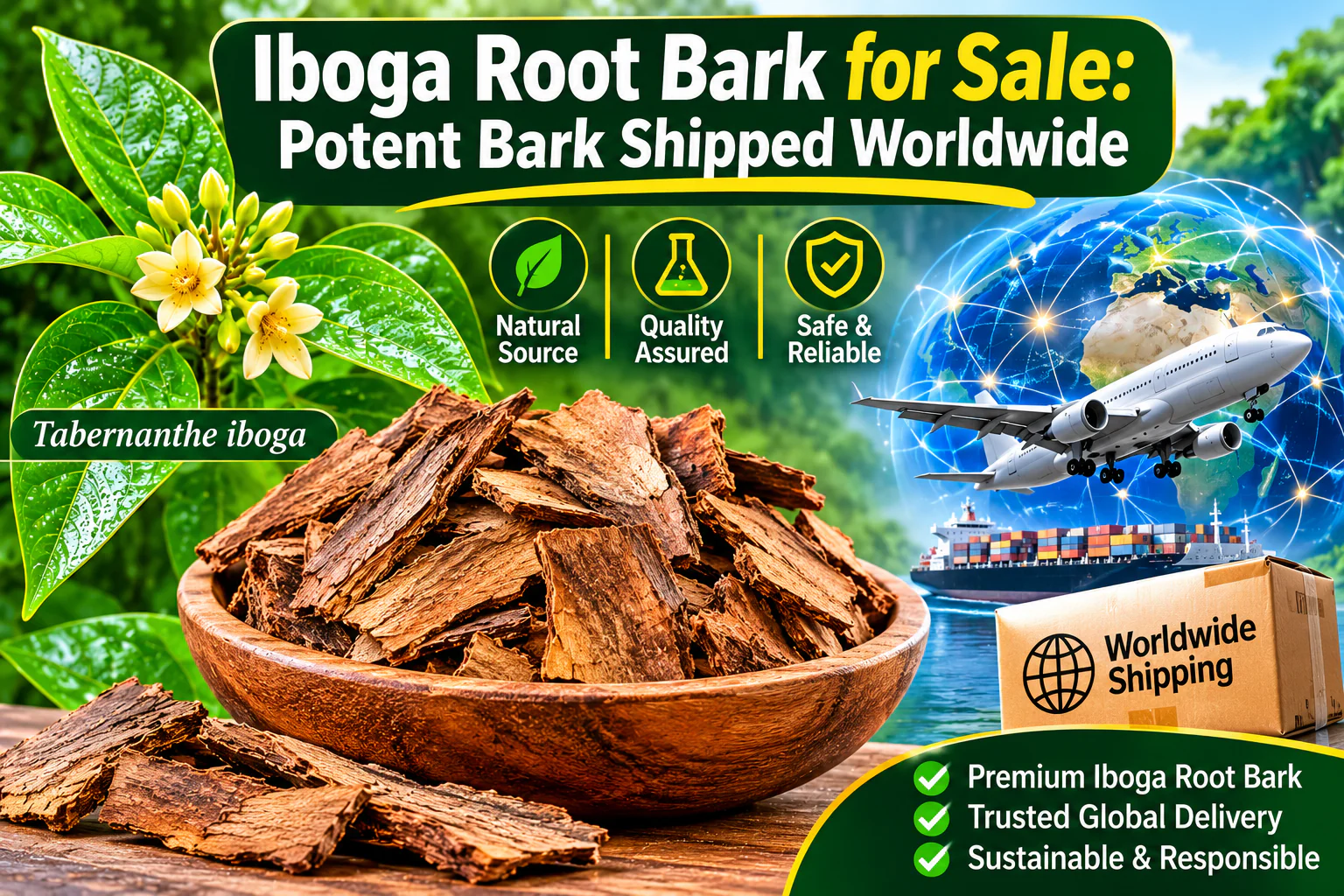
Iboga Root Bark for Sale: Understanding Quality, Potency and Worldwide Shipping Regulations
Are you researching iboga root bark and looking for reliable information about its origins, quality, potency, and international availability? Understanding the differences between natural iboga root bark and processed iboga extracts is an important first step.
Iboga root bark comes from Tabernanthe iboga, a tropical evergreen shrub native to Central Africa. The plant has a long history of traditional and ceremonial use, particularly in Gabon and neighboring regions.
Interest in iboga root bark has also grown because it naturally contains several alkaloids, including ibogaine, a psychoactive compound that has attracted scientific attention.
However, not all iboga root bark has the same chemical composition, and its use carries significant health risks. This guide explores its botanical background, quality considerations, chemical properties, and the legal requirements surrounding international trade.
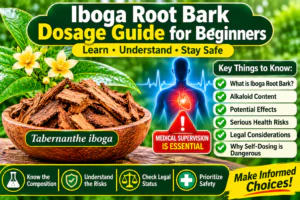
What Is Iboga Root Bark?
Iboga root bark is the outer bark material obtained from the roots of the Tabernanthe iboga plant.
It contains naturally occurring alkaloids, including:
- Ibogaine.
- Ibogaline.
- Ibogamine.
- Other related plant alkaloids.
The concentration and composition of these compounds can vary depending on the plant, growing conditions, geographical origin, and processing.
Unlike purified ibogaine hydrochloride, natural root bark contains a complex mixture of plant constituents.
Understanding Iboga Root Bark Potency
Potency is an important consideration when studying iboga root bark.
However, the appearance, color, texture, and aroma of bark cannot reliably establish its ibogaine concentration.
Chemical composition may vary considerably between samples.
Reliable characterization requires appropriate laboratory analysis, including:
- Alkaloid identification.
- Quantitative ibogaine analysis.
- Screening for contaminants.
- Heavy-metal testing where appropriate.
- Microbiological quality assessment.
- Documentation of sample origin and batch identity.
Claims describing bark as exceptionally potent should be supported by independent analytical evidence.
Natural Iboga Root Bark vs. Iboga Extract
Iboga root bark and processed iboga extracts are different preparations.
| Feature | Natural Root Bark | Iboga Extract |
|---|---|---|
| Origin | Plant root material | Processed plant material |
| Composition | Multiple natural constituents | Depends on extraction |
| Alkaloid profile | Naturally variable | Depends on preparation |
| Testing | Botanical and chemical analysis | Chemical identity and purity testing |
| Consistency | Can vary between samples | Depends on manufacturing controls |
Neither preparation should be assumed to be medically safe based on its natural origin or processing method.
International Shipping and Legal Considerations
People researching iboga root bark online may encounter references to worldwide availability and international delivery.
However, international trade in iboga-derived materials can involve important legal and regulatory considerations.
Before any international transaction, it is important to investigate:
- Import and export restrictions.
- Customs declaration requirements.
- Applicable controlled-substance regulations.
- Botanical and agricultural import requirements.
- Documentation of legal origin.
- Any applicable endangered-species or conservation regulations.
Rules differ between countries, and a product being available online does not establish that it can legally be imported or possessed.
Shipping descriptions should never be used as a substitute for accurate customs declarations or legal authorization.
Sustainable Sourcing and Botanical Conservation
The iboga plant is an important part of Central African botanical and cultural heritage.
Responsible research should consider the environmental impact of harvesting, particularly when root material is collected.
Root harvesting can damage or kill plants, making sustainable cultivation and documented sourcing important considerations.
Useful questions when evaluating botanical sourcing information include:
- Is the geographical origin documented?
- Was the material obtained legally?
- Are harvesting practices environmentally responsible?
- Is there evidence of sustainable cultivation?
- Can the supplier demonstrate appropriate traceability?
Conservation and respect for traditional communities should remain part of discussions about international iboga trade.
Important Medical Safety Information
Iboga root bark contains psychoactive alkaloids, including ibogaine.
Ibogaine exposure can cause serious cardiovascular complications, including QT interval prolongation and potentially fatal heart rhythm disturbances.
Other reported risks include:
- Seizures.
- Dangerous medication interactions.
- Liver complications.
- Severe cardiovascular reactions.
- Potentially fatal arrhythmias.
Natural root bark should not be assumed safer than processed extracts. Its variable chemical composition can make exposure difficult to predict.
Ibogaine should not be used without qualified medical assessment and appropriate clinical supervision.
Frequently Asked Questions
What plant does iboga root bark come from?
It comes from Tabernanthe iboga, a tropical plant native to Central Africa.
Does iboga root bark naturally contain ibogaine?
Yes. Ibogaine is one of several naturally occurring alkaloids found in iboga root material.
Is all iboga root bark equally potent?
No. Alkaloid concentrations can vary depending on plant genetics, growing conditions, origin, and processing.
How can iboga root bark quality be evaluated?
Laboratory analysis can help identify alkaloid composition, contaminants, and other relevant chemical characteristics.
Can iboga root bark be shipped internationally?
International transport depends on the laws of the exporting and importing countries, including customs, botanical import, and controlled-substance regulations.
Is natural iboga root bark safe?
Natural origin does not guarantee safety. Iboga root bark contains psychoactive compounds associated with potentially life-threatening cardiac complications.
Final Thoughts
Iboga root bark is an important botanical material with deep cultural connections to Central Africa and a complex chemical composition.
Understanding its botanical origin, alkaloid profile, quality testing, sustainable sourcing, and international legal status is essential when researching this plant.
Above all, responsible information about iboga should recognize its potentially serious medical risks and the importance of conservation, transparency, and qualified medical guidance.
[…] Other naturally occurring iboga alkaloids. […]
[…] trying to understand the plant, its effects, and the risks associated with using it. However, iboga is not a substance for which a reliable beginner dose can be established from a simple […]