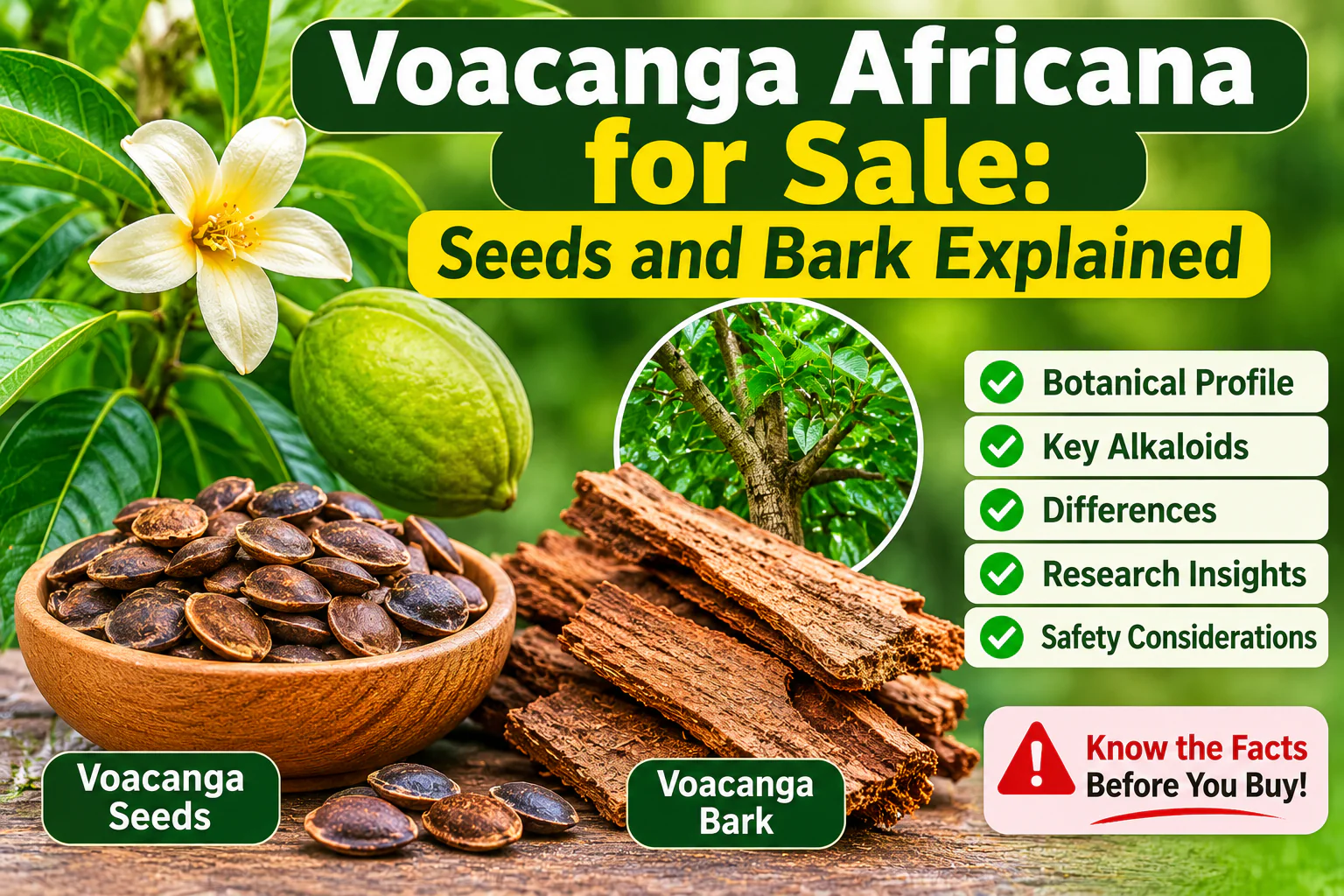
Voacanga Africana for Sale: Seeds and Bark Explained
Introduction
Voacanga africana is a tropical African tree that has attracted attention because of its traditional uses and naturally occurring alkaloids. Its seeds and bark are particularly interesting to botanical researchers studying plant chemistry and natural compounds.
People searching online for Voacanga africana for sale may encounter different products, including whole seeds, dried bark, powders, and botanical extracts. However, these materials are not chemically identical, and understanding their differences is important before evaluating any product.
This article explores what Voacanga africana is, the differences between its seeds and bark, its notable alkaloids, scientific research, and important quality, health, and legal considerations.
1. What Is Voacanga Africana?
Voacanga africana is a small tropical tree belonging to the Apocynaceae family. It grows naturally in several parts of tropical Africa and is known for its broad green leaves, pale flowers, and rounded fruits containing numerous seeds.
The plant has a history of traditional use in some African communities. It has also become a subject of scientific interest because it contains several indole alkaloids.
Indole alkaloids are naturally occurring nitrogen-containing compounds found in various plant species. Some have attracted attention in pharmaceutical and natural-products research because of their biological activities.
The seeds, stem bark, and root bark of Voacanga can have different chemical compositions. Consequently, the name of the plant alone does not tell a buyer exactly which compounds are present in a particular botanical sample.
2. Voacanga Africana Seeds Explained
Voacanga seeds develop inside the plant’s mature fruits. They are one of the botanical materials most frequently discussed in research involving the plant’s alkaloid composition.
One notable compound associated with the seeds is tabersonine, an indole alkaloid that has been investigated in natural-products chemistry.
Other alkaloids may also be present, depending on the sample and its characteristics.
Important characteristics of Voacanga seeds
- They develop inside mature Voacanga fruits.
- They contain naturally occurring indole alkaloids.
- Tabersonine is an important compound associated with seed chemistry.
- Their chemical composition can vary between samples.
- They are used in botanical and laboratory research.
Research has shown that commercial samples sold under the Voacanga name may have different chemical profiles. Therefore, it is not scientifically reliable to assume that all seeds contain identical alkaloids or concentrations.
3. Voacanga Africana Bark Explained
Bark is another important part of the plant investigated by researchers.
Studies have identified several alkaloids in Voacanga bark, including voacamine and voacangine. Other reported compounds include voacamidine and voacristine.
The exact composition depends on the plant material being examined. Stem bark and root bark should not automatically be treated as chemically identical.
Notable compounds associated with Voacanga bark
Voacamine: A dimeric indole alkaloid identified in chemical studies of the plant.
Voacangine: An iboga-type alkaloid investigated in natural-products and pharmacological research.
Voacamidine: Another alkaloid reported in Voacanga botanical material.
Voacristine: A naturally occurring compound identified in research examining the plant’s chemical constituents.
The identification of these compounds does not establish that raw bark is safe to consume or that it has proven medical benefits.
4. Voacanga Seeds vs. Bark: What Is the Difference?
Although both materials come from the same tree, their chemical profiles and botanical characteristics differ.
| Feature | Voacanga seeds | Voacanga bark |
|---|---|---|
| Plant part | Seeds from mature fruits | Stem, trunk, or root bark |
| Notable alkaloids | Tabersonine and other reported compounds | Voacamine, voacangine and related alkaloids |
| Research interest | Seed chemistry and natural-product research | Bark chemistry and pharmacological investigation |
| Appearance | Small, dried botanical seeds | Dried pieces or fragments of bark |
| Composition | Varies between samples | Varies by plant part and sample |
| Safety | Not established for self-use | Not established for self-use |
The main difference is that seeds and bark contain different mixtures of naturally occurring compounds. Neither should be considered a standardized source of a particular alkaloid without appropriate laboratory analysis.
5. Understanding Voacanga Africana Alkaloids
Alkaloids are an important part of the chemical profile of many medicinal and botanical plants.
In Voacanga africana, researchers have identified several indole alkaloids that are of interest to natural-products science.
Some of the better-known compounds include:
- Tabersonine
- Voacamine
- Voacangine
- Voacamidine
- Voacristine
These compounds have different chemical structures and biological properties.
Researchers continue to study their characteristics, but laboratory activity should not be confused with proven effectiveness in humans.
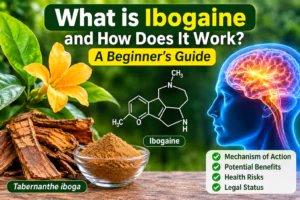
It is also important to distinguish Voacanga africana from Tabernanthe iboga. They are separate plant species, even though certain alkaloids and related chemical structures have attracted interest in research involving both plants.
6. What Should Buyers Know About Voacanga Products?
Online listings may describe Voacanga products using terms such as whole seeds, dried bark, root bark, botanical powder, or extract.
These descriptions are not enough to establish product identity, chemical composition, or safety.
Before evaluating any botanical product, consider the following:
Botanical identification
Correct identification is important because related species may be confused with one another. A reliable botanical identification process is more informative than appearance or a product title alone.
Plant-part identification
Seeds, stem bark, and root bark have different characteristics. Product descriptions should clearly identify the plant part rather than using the general term Voacanga for everything.
Independent laboratory analysis
Laboratory analysis can help identify chemical constituents and assess certain contaminants.
A useful analytical report should identify the sample examined and explain the methods and results. A generic certificate or promotional statement does not establish the composition of every batch.
Responsible sourcing
Responsible harvesting and cultivation are important environmental considerations. Removing bark carelessly can damage or kill trees, making sustainable collection practices especially relevant.
7. Is Voacanga Africana Safe?
Natural origin does not automatically mean a substance is safe.
Voacanga contains biologically active alkaloids, and the effects of consuming unstandardized plant materials are not sufficiently established.
Potential concerns include:
- Unpredictable exposure to active alkaloids
- Unwanted neurological or cardiovascular effects
- Possible interactions with medicines or other substances
- Misidentification or contamination
- Unknown risks associated with concentrated preparations
There is insufficient evidence to recommend a safe self-use amount for Voacanga seeds, bark, or extracts. Readers should avoid consuming unfamiliar botanical preparations or attempting to prepare concentrated products for personal use.
Anyone who experiences concerning symptoms after exposure should seek medical attention.
8. What Does Scientific Research Say About Voacanga Africana?
Scientific interest in Voacanga africana is largely focused on its natural chemical compounds and their potential biological activities.
A study published in 2020 investigated alkaloids isolated from Voacanga stem bark and examined their activity against Onchocerca ochengi, a parasite used in laboratory research.
Another study published in 2023 investigated the distribution of small-molecule compounds in Voacanga seeds using advanced analytical techniques.
These studies contribute to understanding the plant’s chemistry. However, laboratory findings do not establish that Voacanga products are effective treatments for human diseases.
Further research is needed to understand the pharmacology, toxicity, and potential applications of individual compounds.
9. Legal and Environmental Considerations
The legal status of Voacanga africana products may differ between countries. Rules can depend on the type of preparation, intended use, and applicable botanical or medicinal-product regulations.
Anyone considering importing, exporting, possessing, or selling Voacanga materials should check current local requirements.
Environmental responsibility is equally important. Sustainable cultivation and careful harvesting can help protect wild plant populations and reduce unnecessary damage to trees.
10. Frequently Asked Questions
What is Voacanga africana?
Voacanga africana is a tropical African tree belonging to the Apocynaceae family. It is known for its naturally occurring indole alkaloids and has attracted interest in traditional botanical practices and scientific research.
What is the difference between Voacanga seeds and bark?
Seeds and bark are different plant materials with different chemical profiles. Tabersonine is particularly associated with seed chemistry, while compounds such as voacamine and voacangine have been identified in bark.
Do Voacanga africana seeds contain ibogaine?
The chemical composition of commercial Voacanga samples can vary. Some analyzed products have contained ibogaine-related alkaloids, while others have shown different profiles. The presence or concentration of a specific compound should not be assumed without laboratory analysis.
Does Voacanga bark contain voacamine?
Yes. Voacamine has been identified in studies examining Voacanga bark, alongside other naturally occurring alkaloids.
Is Voacanga africana the same as iboga?
No. Voacanga africana and Tabernanthe iboga are different plant species. Both belong to the Apocynaceae family, but they have distinct botanical and chemical characteristics.
Why is Voacanga africana studied?
Researchers study Voacanga because it contains diverse indole alkaloids that are relevant to natural-products chemistry and pharmacological investigation.
Can Voacanga seeds or bark be consumed safely?
There is insufficient evidence to establish a safe amount for self-use. The chemical composition can vary, and consuming unstandardized plant materials may cause harm.
Why is laboratory testing important?
Laboratory testing can help establish chemical composition, identify certain contaminants, and provide information about sample quality. It cannot guarantee that a botanical material is safe for human consumption.
Conclusion
Voacanga africana is a tropical African plant with an interesting history and a diverse chemical profile. Its seeds and bark have attracted scientific attention because they contain different naturally occurring indole alkaloids.
Seeds are particularly associated with tabersonine, while bark contains compounds such as voacamine and voacangine. These differences are important when understanding botanical products and interpreting scientific research.
For anyone researching Voacanga africana for sale, the most important considerations are accurate botanical identification, clear plant-part descriptions, independent laboratory analysis, responsible sourcing, and awareness of health and legal risks.
Although researchers continue to investigate the plant’s alkaloids, more evidence is needed before their potential medical applications can be established.
Medical disclaimer: This article is intended for educational and botanical information only. It does not recommend consuming Voacanga seeds, bark, powders, or extracts. It is not medical advice or a substitute for consultation with a qualified healthcare professional.